
Research and reference intake
A model round begins with source photographs, published dimensions, and plan and side references of the real vehicle. The references guide recognizable shape; they are not an automatic truth when a reference itself is wrong.
Proportion comes first: hull length and width, turret station, roof height, gun length, wheel count, track course, and major armor masses must read correctly before small fittings are added.
Build the visible machine from parts
Procedural builders assemble hull plates, turret shells, mantlets, barrels, running gear, optics, hatches, smoke launchers, baskets, antennas, armor kits, and stowage from reusable geometry and material vocabulary. Station-section measurements keep front, middle, and rear masses faithful instead of stretching one generic box.
Camouflage-aware structural parts and neutral mechanical parts use explicit roles.
Rig articulation and running gear
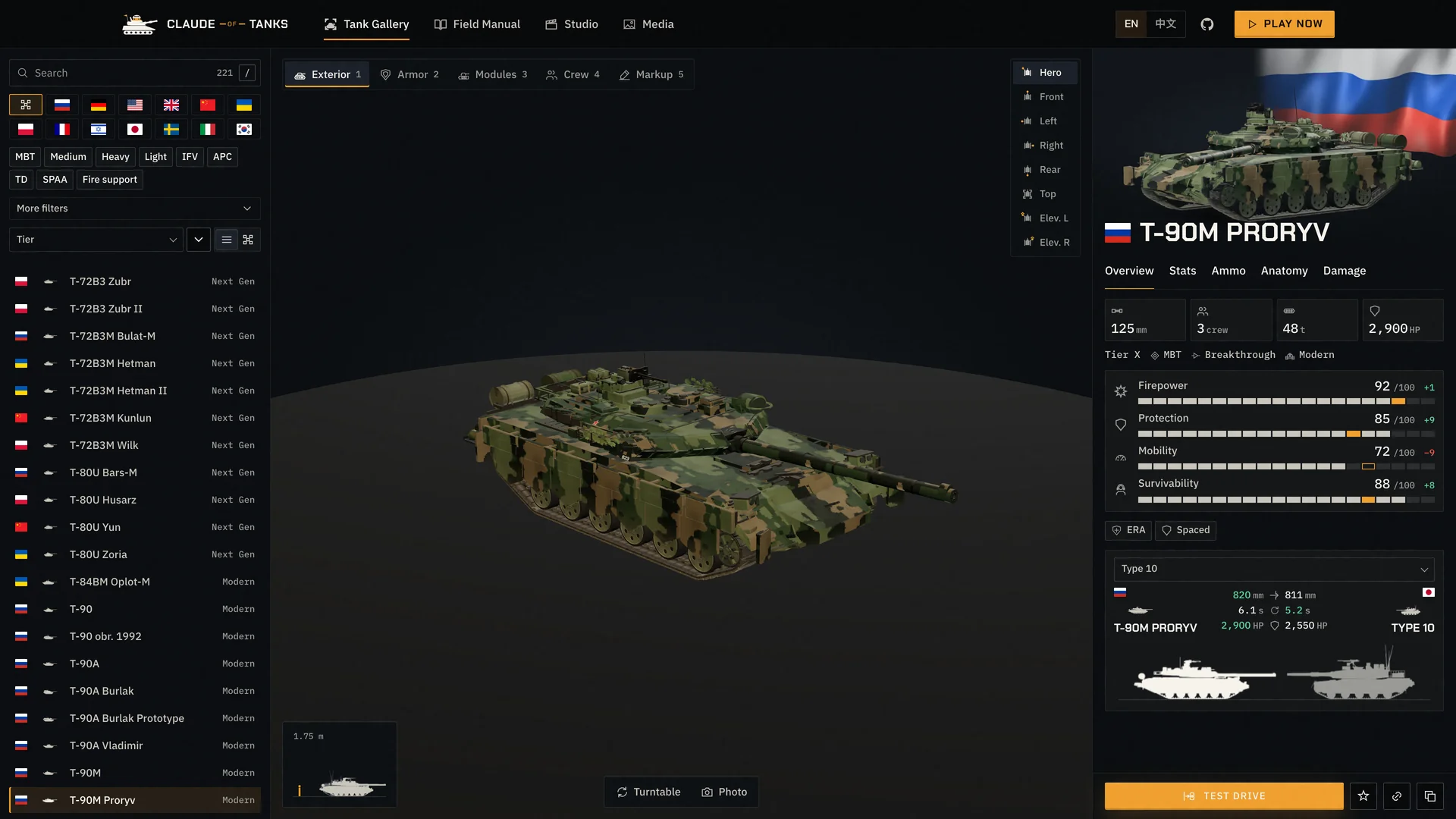
Hull, turret, gun mount, recoil group, muzzle, wheels, return rollers, sprockets, idlers, and linked tracks have explicit owners. Turret equipment must rotate with the turret and remain visibly seated; hull equipment must not follow it. The muzzle bore must be open and resolve from the actual barrel hierarchy.
Suspension samples terrain at each support station. Native running gear preserves the correct wheel count and track path while avoiding duplicated donor wheels, clipping shoes, or floating attachments.
Suspension and tracks
Each supported wheel samples terrain beneath its own station. The visual suspension settles to those contacts, the hull derives pitch and roll from support, and the track path is rebuilt around the moved wheels. Swedish siege suspension adds commanded hull attitude without breaking gun tracking.
Track animation follows traveled distance and side speed. Damage can detach a side, remove its running band, throw a persistent ribbon, and leave loose running-gear pieces.
Author combat anatomy from the same shape
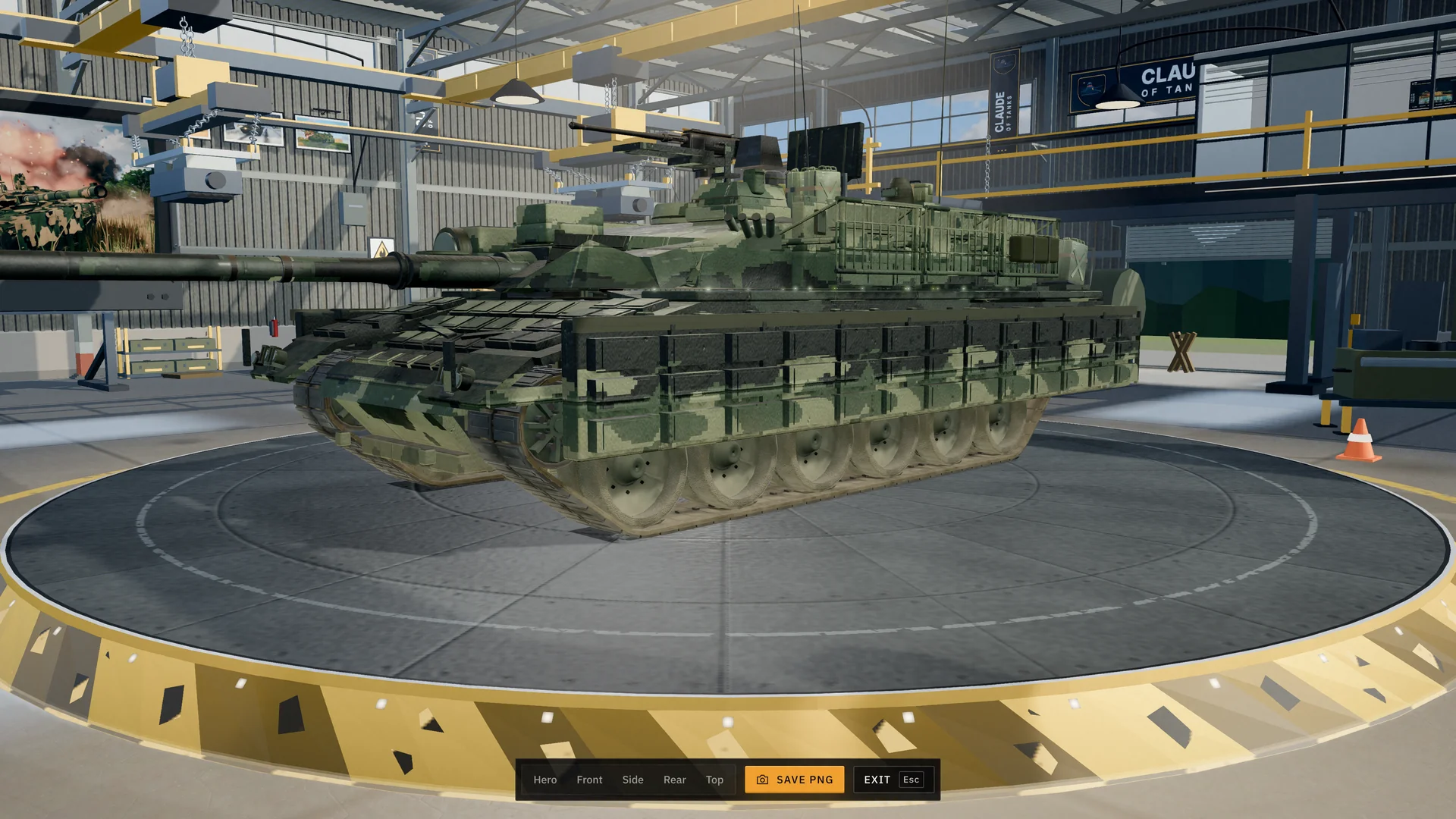
Armor plates, spaced layers, ERA, modules, ammunition, fuel, crew, and articulation anchors are calibrated to the checked vehicle frame. The game therefore uses the same authored shape for presentation, impact tracing, internal damage, and the technical side diagrams.
Structural cupolas can participate in hit geometry. Sights, machine guns, baskets, antennas, and loose equipment remain presentation fittings unless gameplay explicitly gives them a physical role.
Generate icons and technical cards
The asset pipeline renders the current procedural rig into garage and gallery imagery, transparent silhouettes, armor diagrams, separate module and crew diagrams, tier treatments, and supporting presentation views. One deterministic angle capture now emits both portrait sizes through a shared framing policy, so a new tank cannot leave behind a hand-cropped or stale thumbnail.
Use npm run tank:portraits -- --ids= and npm run tank:portraits:check -- --ids= for portrait-only work. The complete release sequence remains npm run tank:anatomy:update, npm run tank:anatomy:check, then npm run tank:release:check -- --ids=.
Measure, inspect, and graduate
Automated gates check geometry fingerprints, dimensions, stations, floaters, track intersections, wheel quality, muzzle bores, materials, armor anatomy, markings, provenance, and deterministic asset freshness. Standard front, quarter, side, rear, top, close, and yaw views then expose defects a numeric score can miss.
A model graduates only when every required view clears the visual acceptance floor, attachments have physical load paths, winding and backfaces are healthy, and the clean integrated release check passes. The Tank Gallery is the live inspection surface for that final procedural rig.