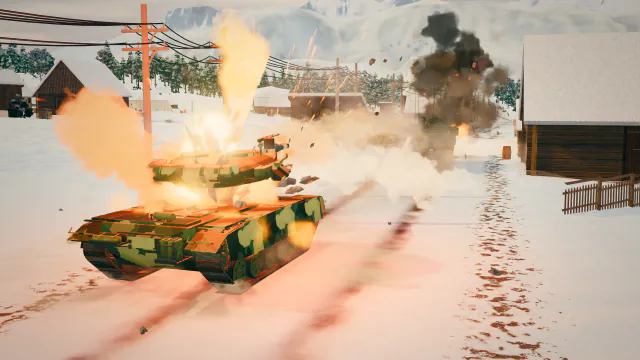
Fixed-step battle loop
The authoritative step uses meters, seconds, radians, and a fixed 1/60-second interval. Input is sampled into explicit vehicle controls before movement, combat, spotting, and result evaluation run in a stable order. Render rate can change without changing the number or order of simulation steps.
Frame-time spikes accumulate into bounded fixed steps. Authoritative randomness is seeded or injected. Wall-clock time and Math.random() are excluded from rules that affect a shot, reload, module state, or match result.
The host runs the match
The room Worker coordinates discovery and signaling. It does not run the sixty-step battle simulation. The host browser runs the match authority and exchanges WebRTC data with peers. Guests send inputs; the host resolves movement, firing, reloads, collisions, damage, bots and results.
The local vehicle predicts movement and reconciles against acknowledged host state; remote vehicles interpolate snapshots. Nearby and recently engaged opponents refresh more often than distant visible actors. Combat events remain ordered independently of those interest tiers. Prediction improves responsiveness but cannot award a hit or change the authoritative result.
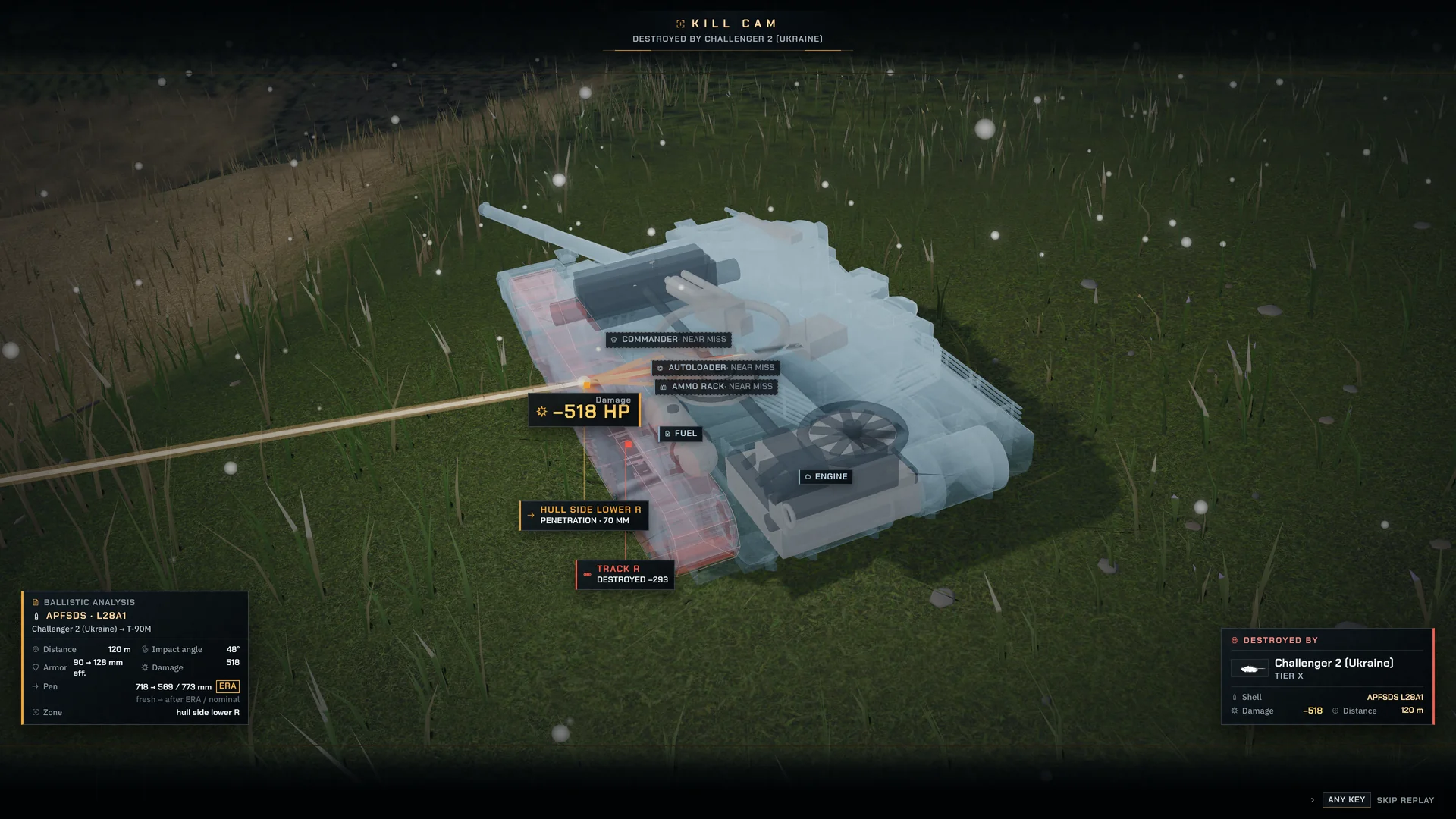
Visibility and trust
Guest snapshots contain only enemies the viewer is allowed to see. Filtering occurs before encoding, so hidden coordinates are not simply sent and concealed by the renderer. Team vision and spectator perspective also govern nameplates, minimaps and presentation.
A browser host is still a participating player’s machine and must hold the authoritative world. Peer hosting should not be described as having the same trust boundary as an independent dedicated server. The protocol checks input ordering and message shape; it cannot turn an untrusted host into trusted tournament infrastructure.
Terrain and movement
Height fields answer vehicle support, projectile collision, camera clearance, and prop placement. Surface class affects grip and presentation. Roads, slopes, ridges, water edges, and hull-down positions are composed around the intended armored routes.
Vehicle suspension samples the same ground surface used by movement and ballistic terrain queries.
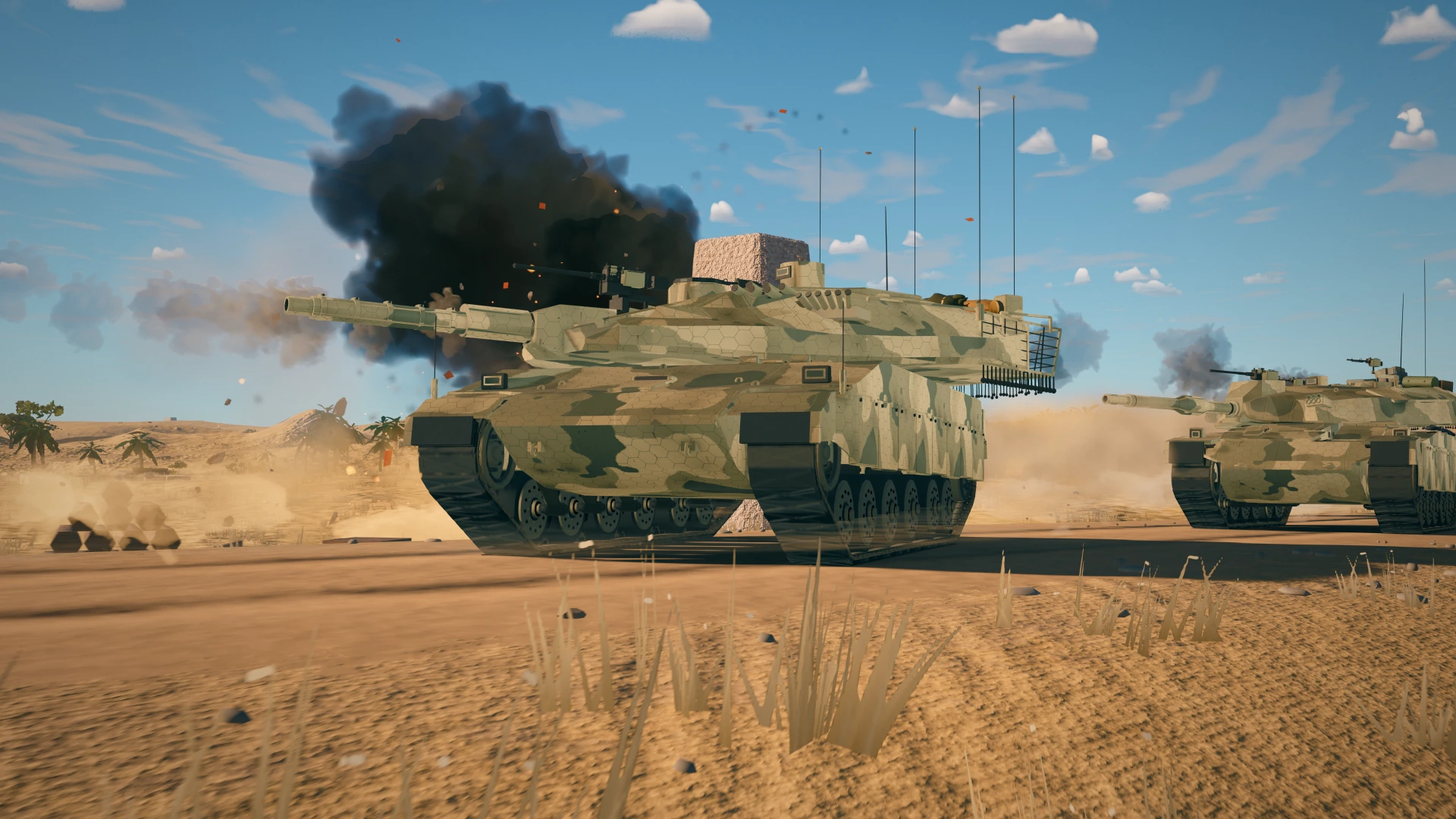
Verification
Node-runnable self-tests cover movement, combat, spotting, missile guidance, special actions, AI aim, and the complete authoritative match. Browser probes add bore parity, projectile travel, live impact effects, and HUD alignment.
Run node src/sim/combat.selftest.mjs, node src/sim/authoritativeMatch.selftest.mjs, and npm test after changing shared combat rules.
Driving, airtime and landing damage
Movement runs at a fixed sixty steps per second. Engine power, weight, forward and reverse limits, track condition, terrain resistance and hull rotation jointly determine handling. The renderer interpolates those states rather than changing movement with frame rate. Handbrake behavior is grounded; landing after a jump must not silently latch the brake.
A fall is a physical impact, not just a height threshold. Mass, impact speed, attitude and mode physics affect the result. Reduced gravity changes both your arc and the terrain you can safely reach. Avoid blind drops at bridge abutments or cliff edges; use a route with a visible landing and enough room to settle.