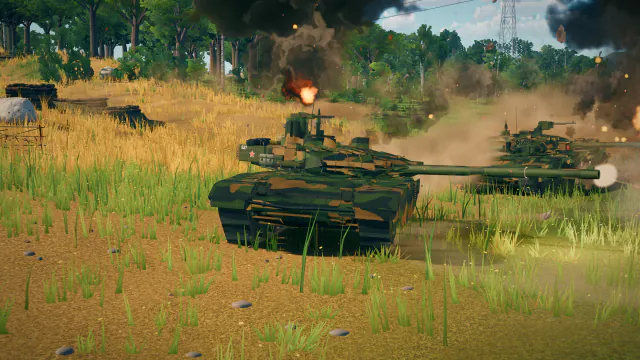
Perception and target choice
Bots consume the same team, visibility, range, health, and vehicle-state contracts used by authority. They do not read rendered objects or hidden client-only coordinates. Candidate targets are scored from current tactical state rather than selected by scene proximity alone.
Difficulty changes reaction, aim quality, engagement distance, and decision pressure without granting information the bot should not have.
Seeded route planning
One typed traversability grid is built per match from terrain mobility, world collision, openings, objectives, and vehicle capabilities. The planner supplies deterministic paths around blocked cells while local steering handles immediate alignment and avoidance.
Route decisions can be reproduced in Node across every map, including heavy vehicles, tracked damage, steep slopes, and objective modes.
Gun handling and fire control
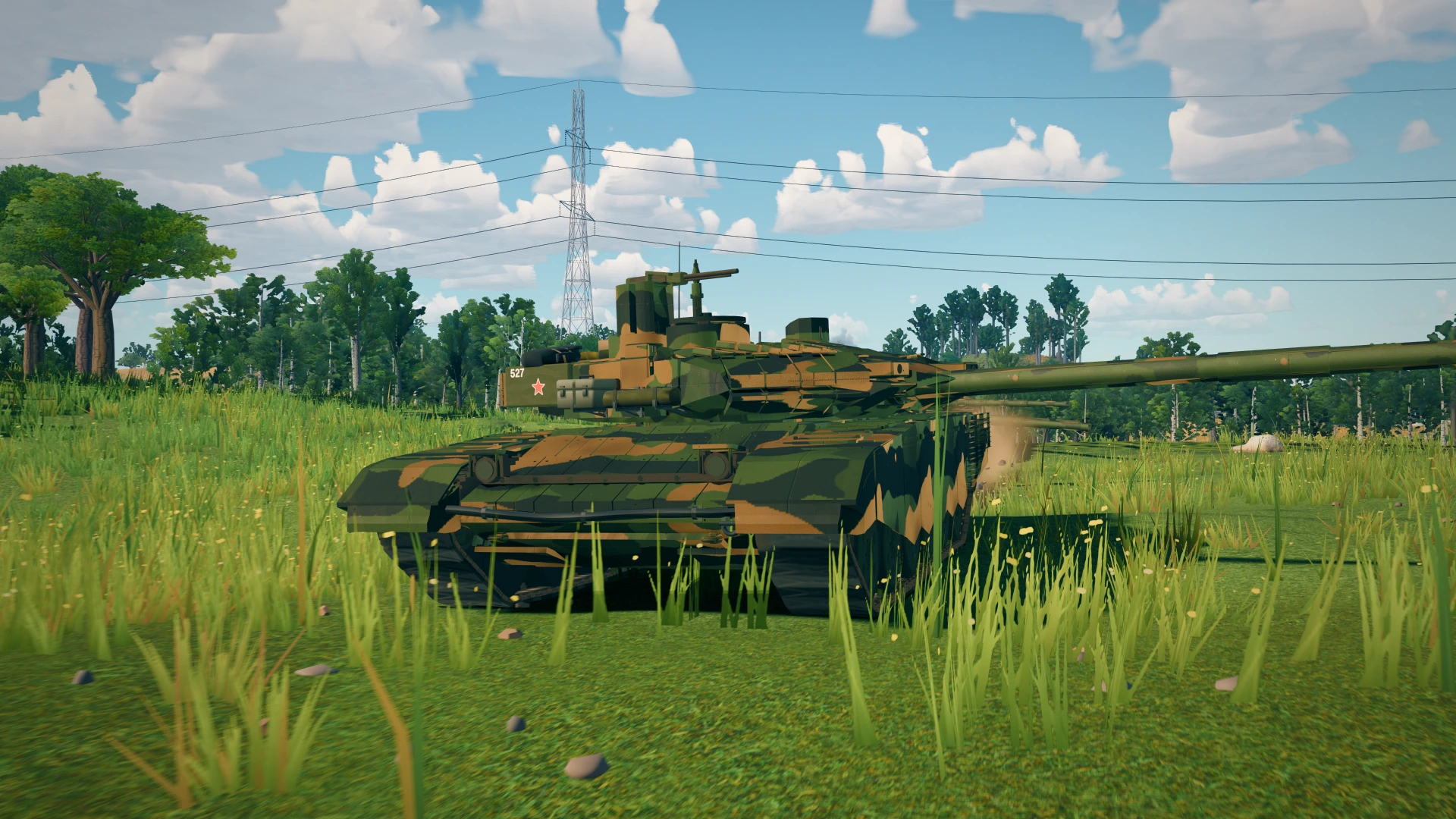
The controller respects turret traverse, elevation and depression, bore obstruction, reloads, magazines, dispersion, shell velocity, penetration, and target motion. It aims for hittable armor and internal weak areas when the current weapon and angle make that shot credible.
Autocannons, single-shot guns, autoloaders, and guided weapons share the same decision boundary but apply their own cadence and ammunition state.
Team safety and pressure
Friendly vehicles are rejected from valid shot paths, and the controller avoids firing through allies. Bots spread their attention, move to useful lanes, support objectives, and keep enough separation to avoid turning one friendly cluster into an obstacle.
Enemy bots and allied bots use the same logic. Team assignment changes targets and objectives, not competence.
Survival and recovery
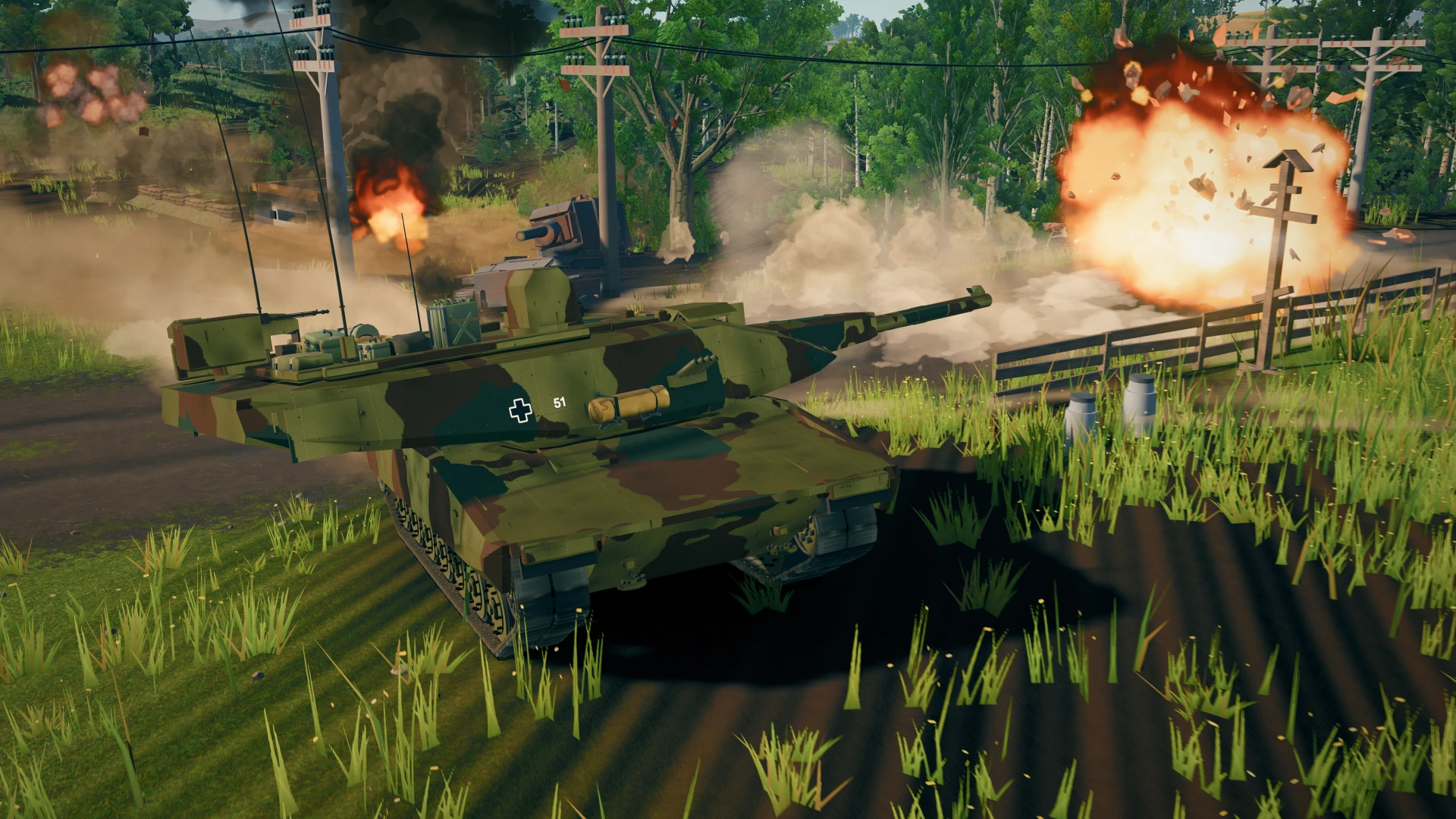
Bots consider exposure, cover, damaged tracks, disabled modules, repair opportunities, ammo state, and nearby threats. They can disengage from a losing angle, recover movement, re-path after destruction, and continue contributing instead of waiting in open ground.
Mode objectives layer onto these survival decisions so capture, defense, escort, and horde pressure do not require separate fake movement systems.
Verification
Focused AI tests cover aim, friendly-fire rejection, routes, difficulty, deterministic decisions, and authoritative bot integration. Map-wide server tests run the controller without rendering, while browser battles verify that visible movement, firing, and effects match those decisions.
Bot changes run node src/game/ai.selftest.mjs, node src/sim/ai.aim.selftest.mjs, node src/sim/botRoutePlanner.selftest.mjs, and node server/authoritativeBots.selftest.mjs.
Classic, Jev and coordinated objectives
Classic and Jev share the local driving, aiming, visibility and vehicle-system logic on both allied and enemy teams. Jev adds bounded team-level orders; it does not bypass spotting or replace the physical driver. Choose the brain and difficulty before the next match. An allied team should not retain an older behavior set just because it fights alongside the player.
Flag teams distribute recovery, escort and raiding roles. Turbo Ball retains a striker long enough to circle behind the ball and line up a push, with screening and defensive support. Zone teams distribute capture pressure. Mobile units can flank while anchors maintain pressure; navigation includes right-of-way for the human, committed passing and safe reversing when vehicles block one another.
Smoke, remote guns and safe jumps
Bots can deploy fitted smoke when withdrawing, under pressure or reloading, and operate remote automatic guns against eligible visible opponents. They only request a jump when the mode allows it and the prospective landing is affordable. Cliff and bridge approaches need a valid route; a direct line to the objective is not enough.
Behavior tests include all 33 maps, flag and ball scenarios, congestion, fall-risk decisions and a large Jev team workload. Their guarantees are scoped to the tested scenarios: they catch regressions in decisions and bounded work, but do not prove that a bot will solve every possible terrain or traffic situation.