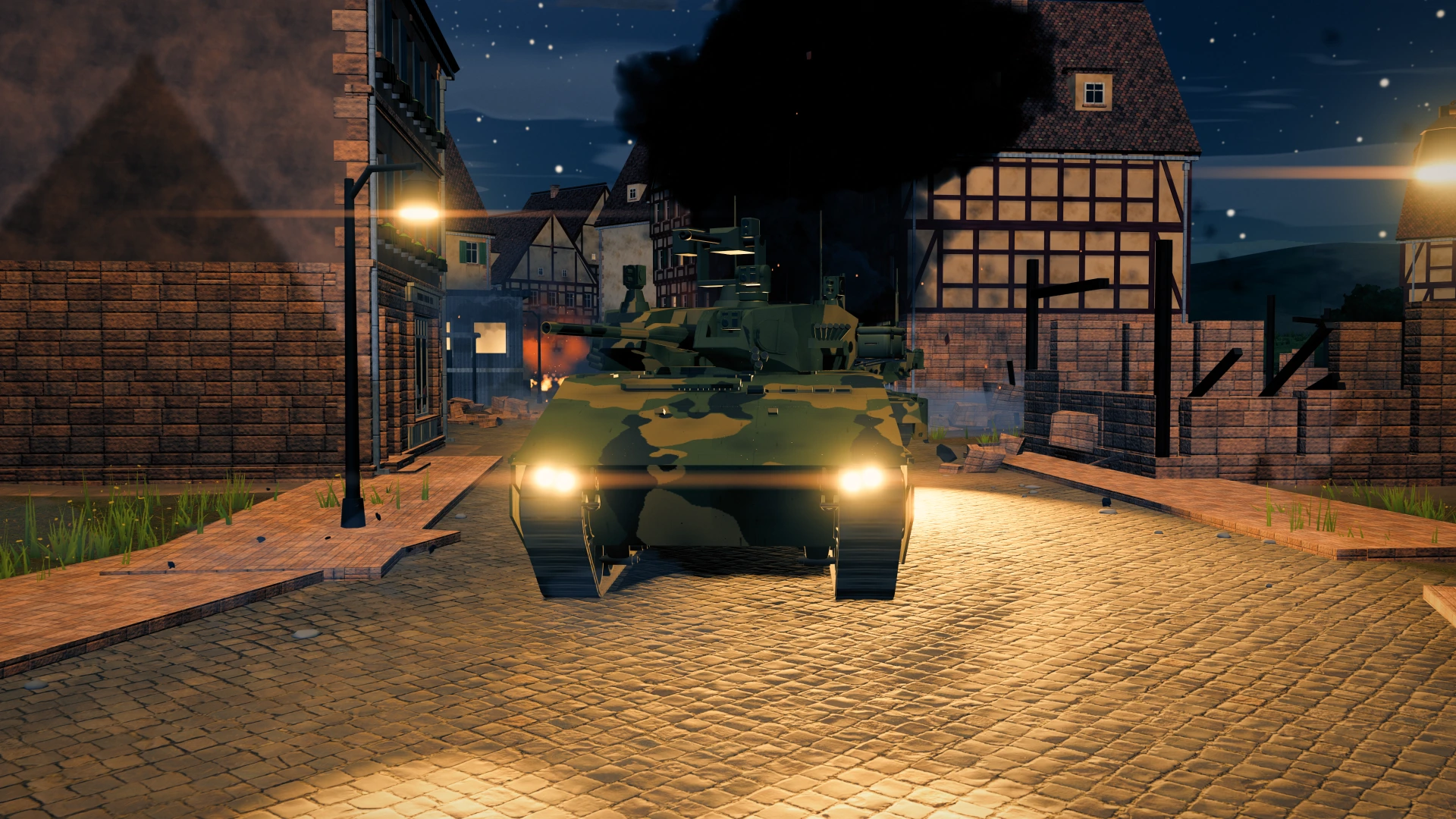
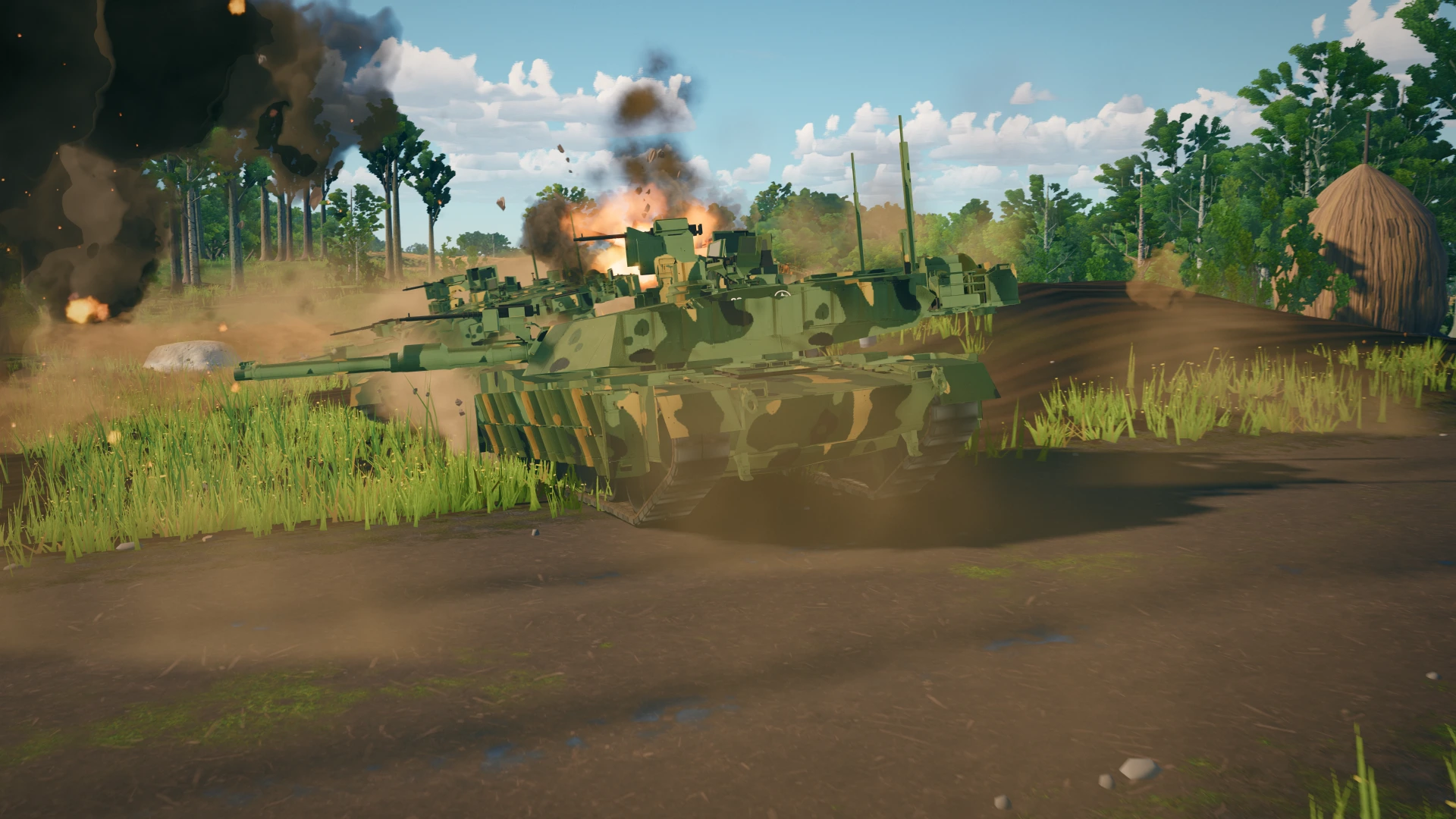
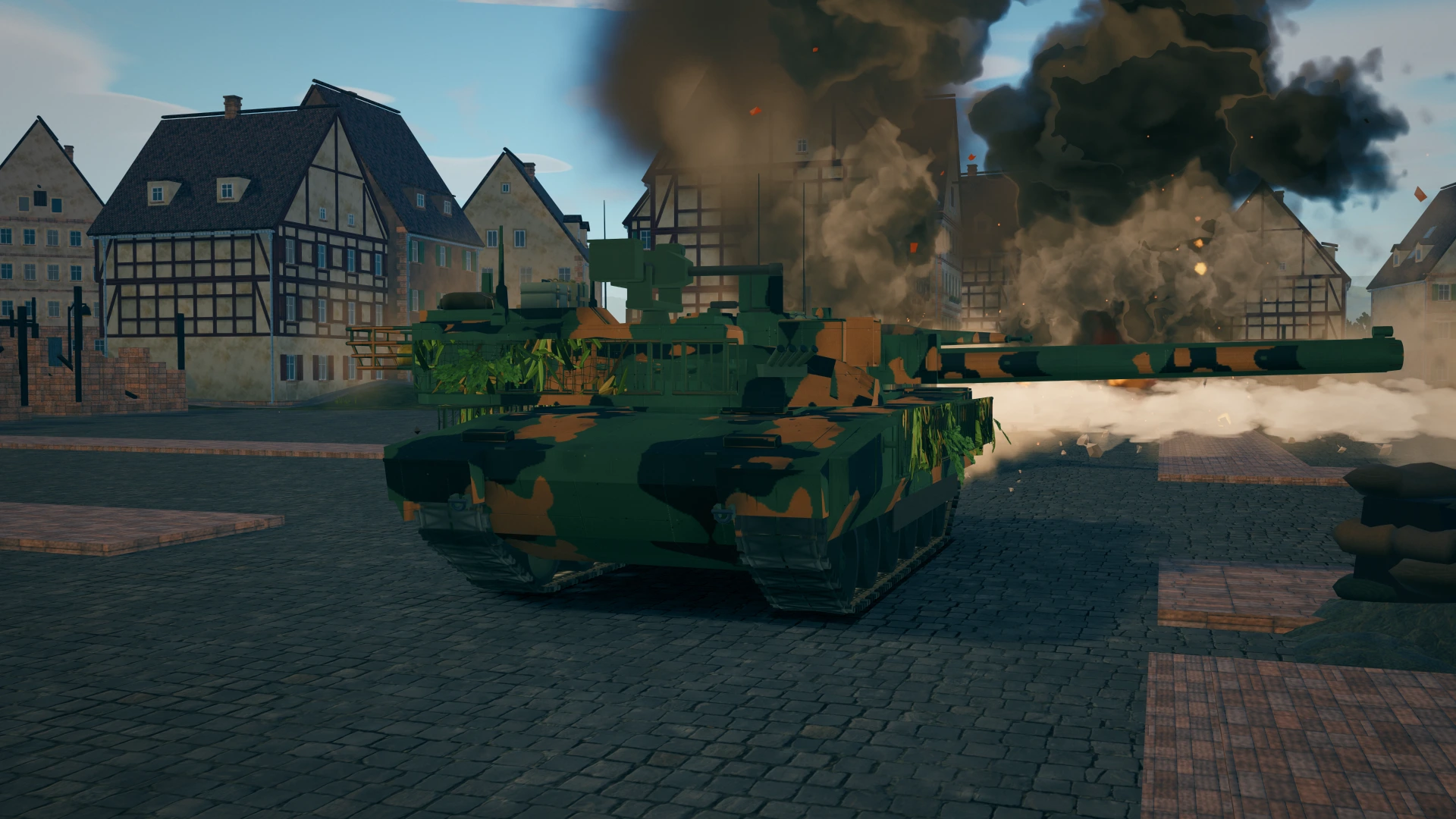
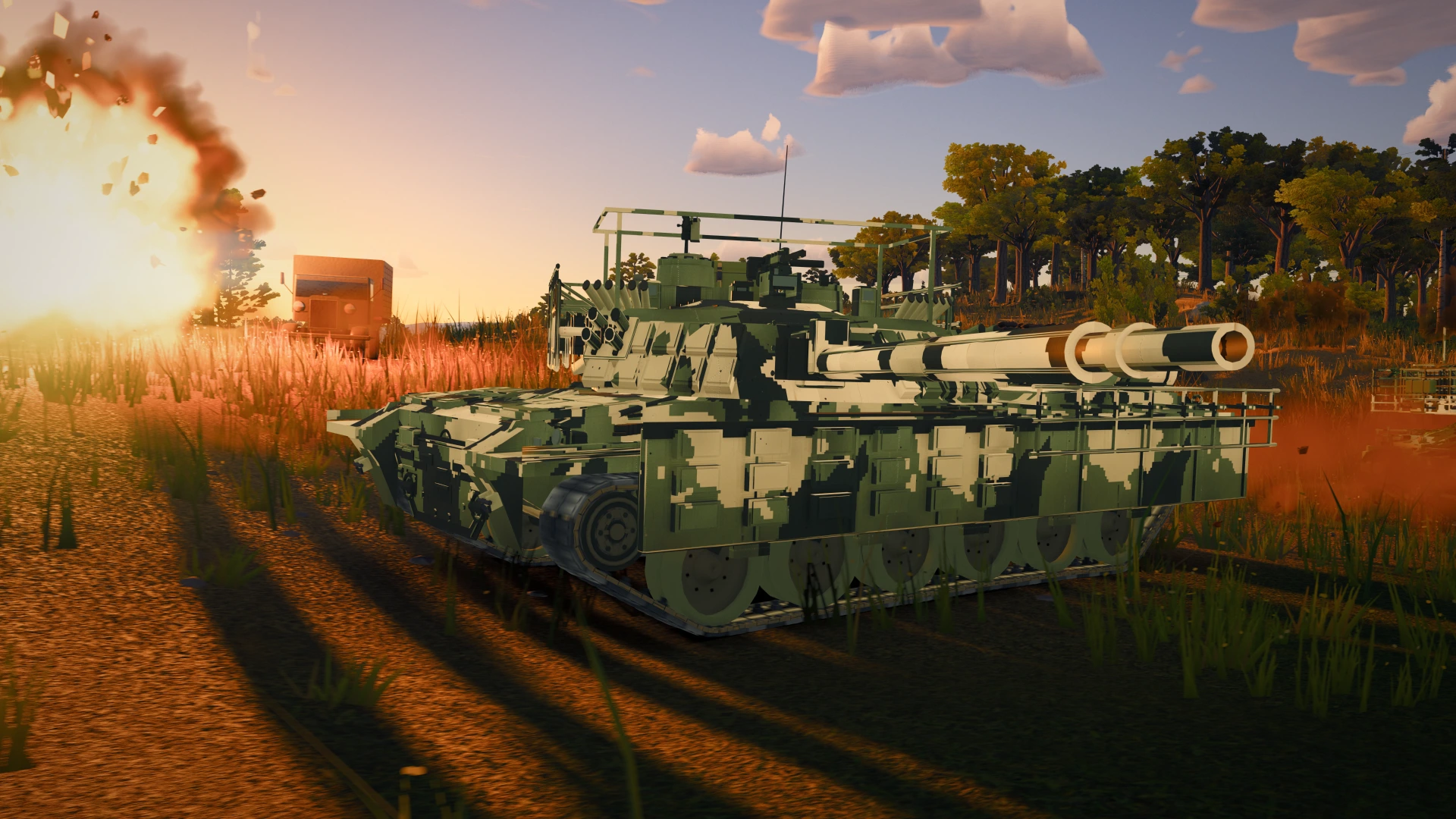
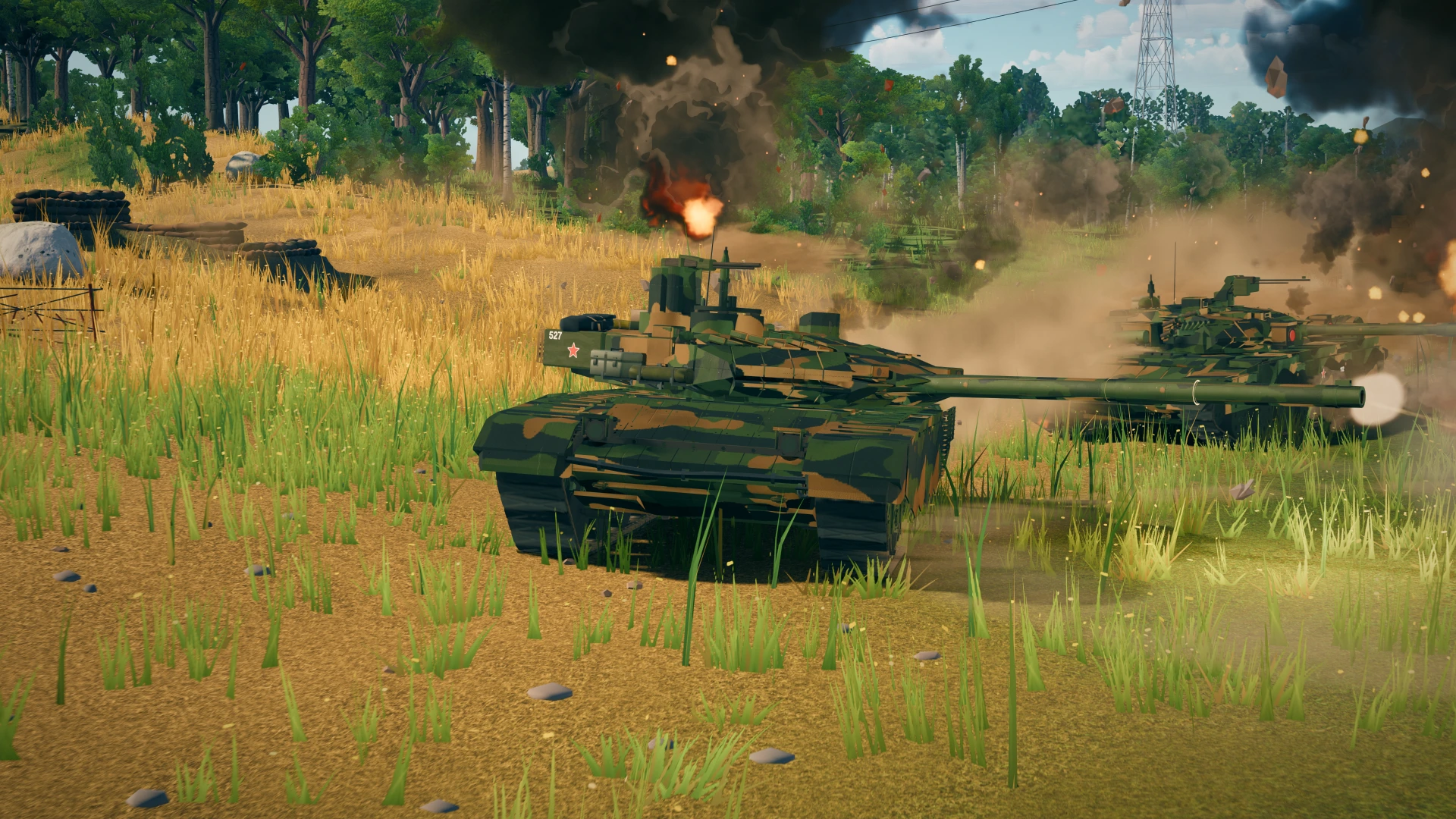
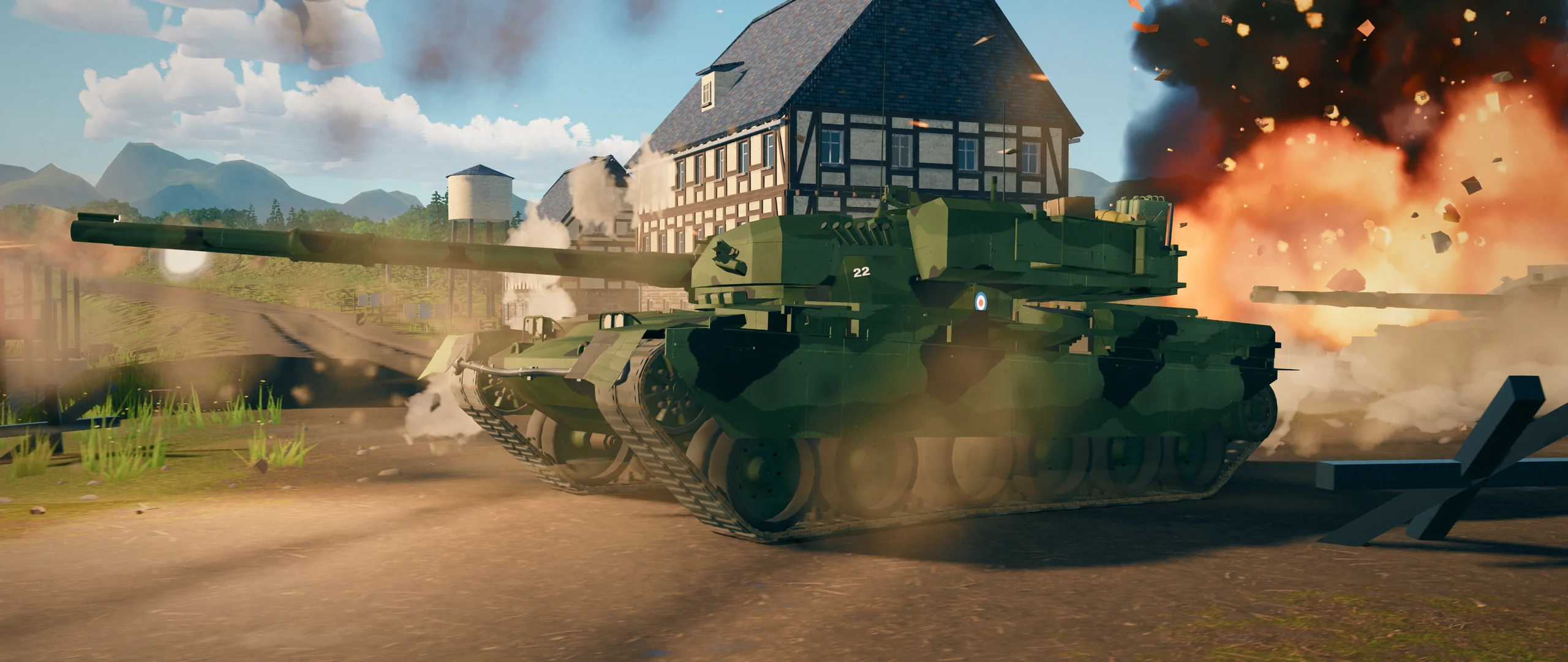
Three armored vehicles exchanging fire in Steinburg

Engineering field manual // Updated 3 September 2026

Inside the
browser battlefield

See how Claude of Tanks turns Three.js, deterministic simulation, procedural vehicles, physical ballistics, networking, and production tooling into one playable browser game.

12 focused manualsRenderer-free public pagesExecutable verification

Current in-engine feature reelApproved v13 // 24 seconds
Production fleet
164 vehicles
Battlefields
30 maps
Simulation
60 Hz fixed step
Presentation
120 FPS test path

Choose a system

Focused field manuals

Start with how the game was made, follow the model pipeline, or open a specific runtime system. Every guide connects behavior to ownership and proof.

01 // Current system

Current runtime overview

Claude of Tanks is a browser-based armored combat game built directly on Three.js. Production exposes 164 first-party procedural vehicles; a keyed local-development build exposes 201 playable models from 203 saved roster records. The game contains 30 authored battlefields, runs combat at a fixed 60 Hz, and supports local bots, persistent private and LAN rooms, and dedicated ranked authority.

01

Authoritative simulation

Clients request actions. The authority resolves movement, reloads, hits, damage, visibility, destruction, and match results.

02

Measured presentation

Three.js renders simulation state and adjusts visual cost without changing combat rate, map dimensions, ballistics, or armor.

03

Verified assets

Geometry fingerprints, generated diagrams, deterministic screenshots, browser checks, and release tests verify the current assets.

Scope statementVehicle statistics and diagnostic overlays describe this game simulation. They are not real-world protection, engineering, or survivability assessments.

02 // Graphics + drivers

Three.js rendering architecture

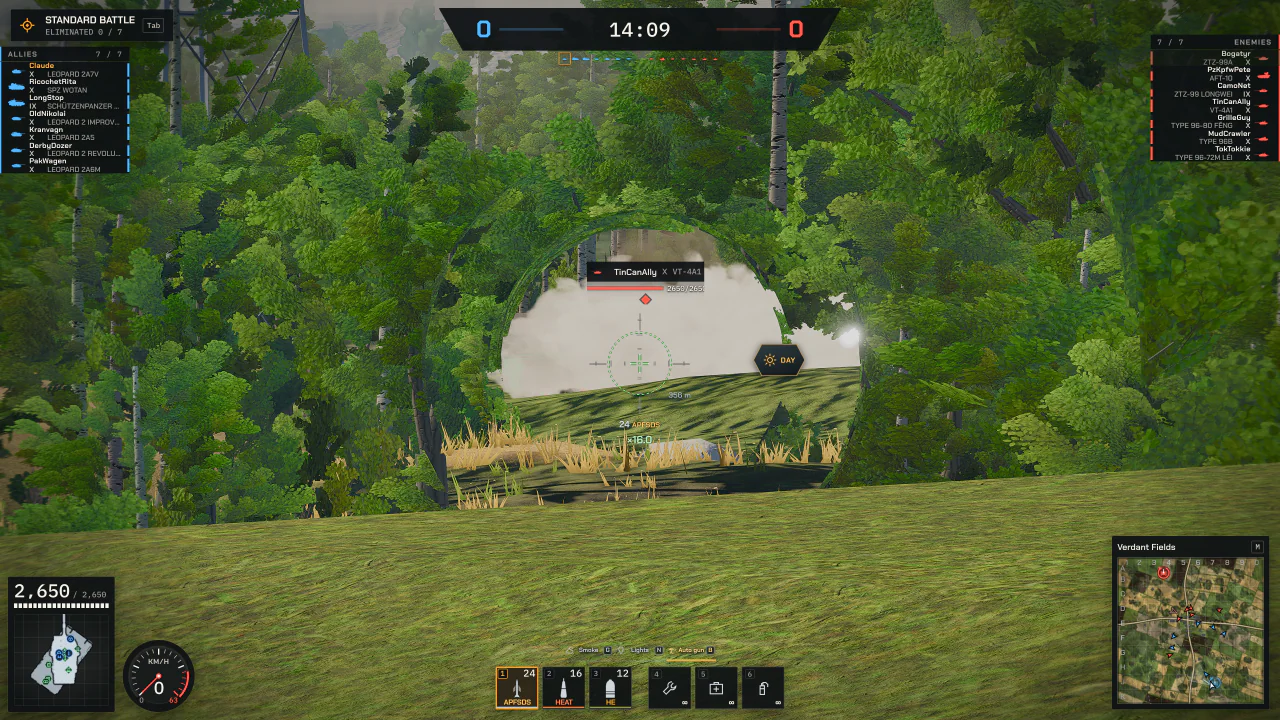
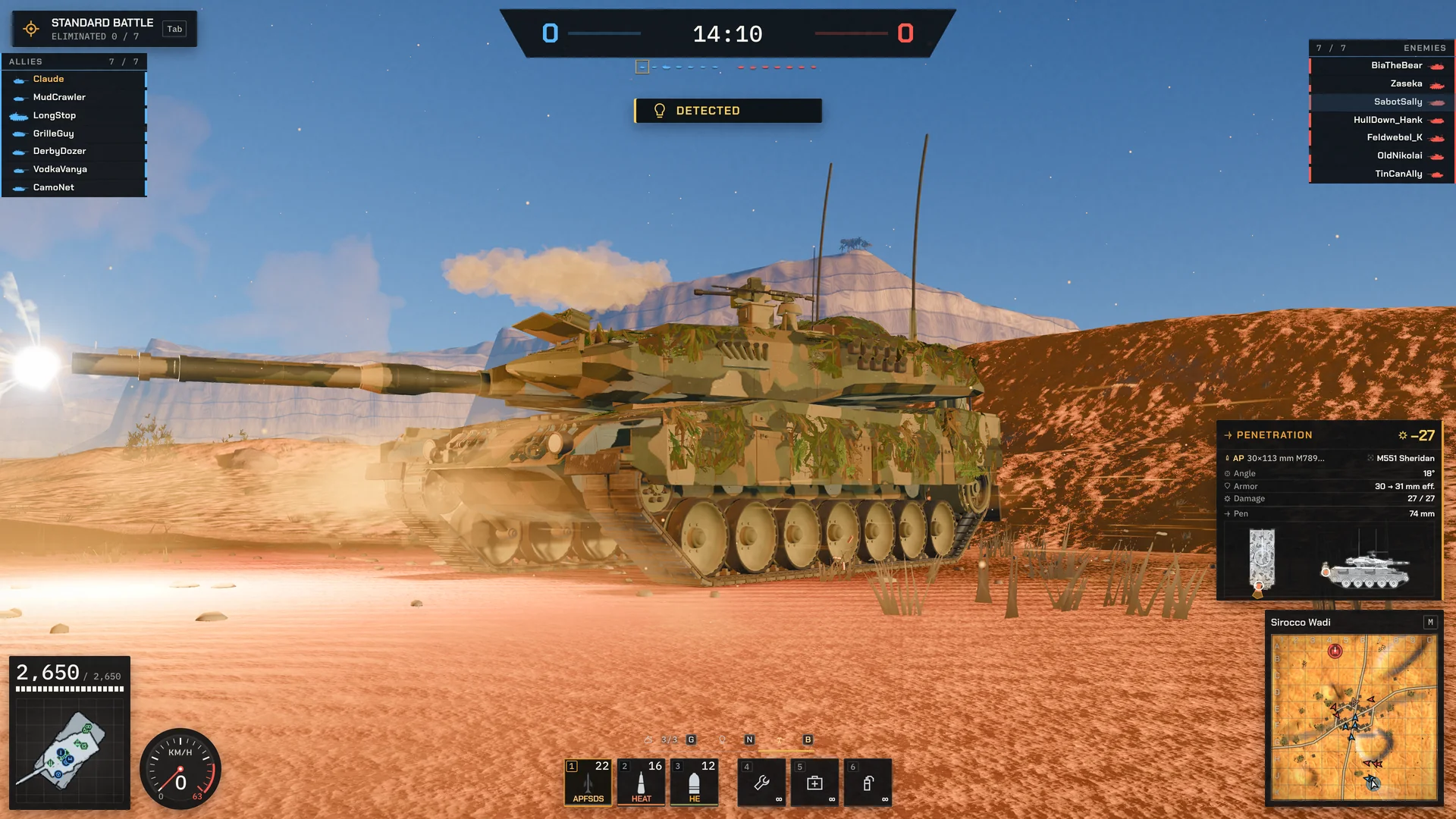
The engine owns the Three.js renderer, color output, camera, lighting, sky, fog, post-processing, shadows, GPU timing, quality policy, warmup, and context recovery. The renderer combines output conversion and color grading, supports stable high-refresh presentation, preserves image clarity during battle loading, and anchors cascaded shadows to prevent flashing during camera movement.

Current game renderer and HUD from a K2
Game frame // current lighting, shadows, atmosphere, HUD
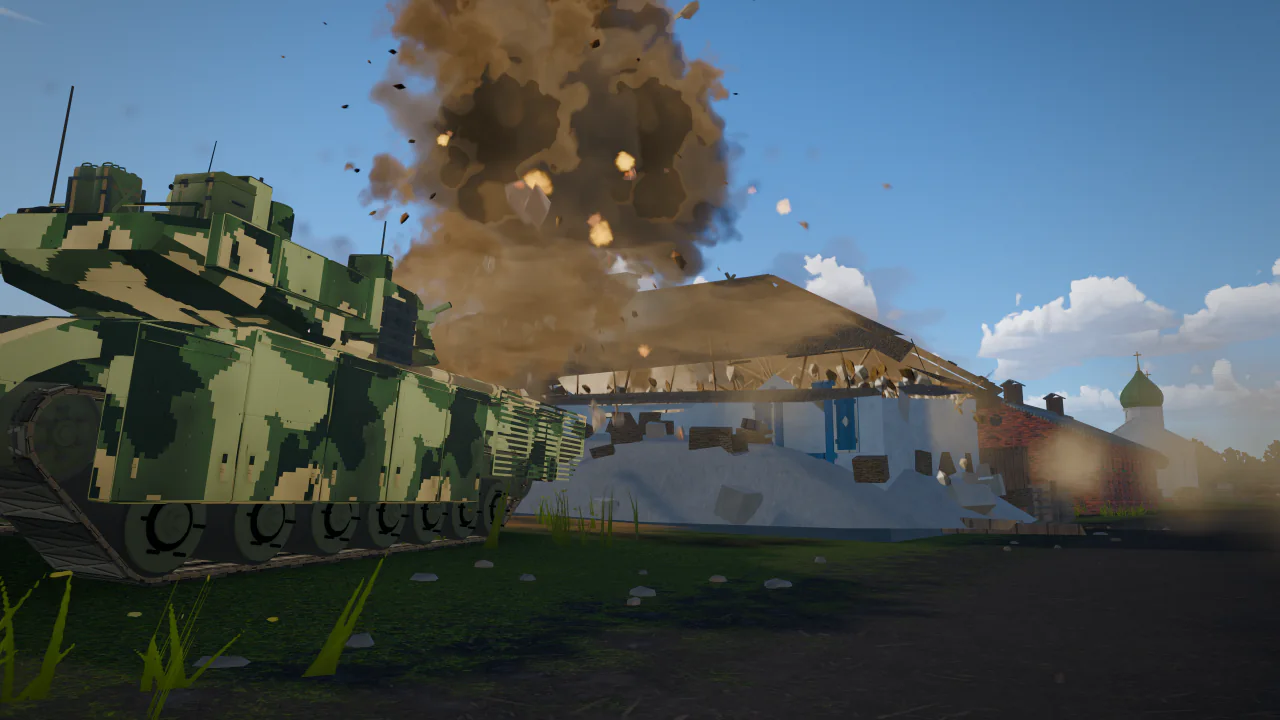
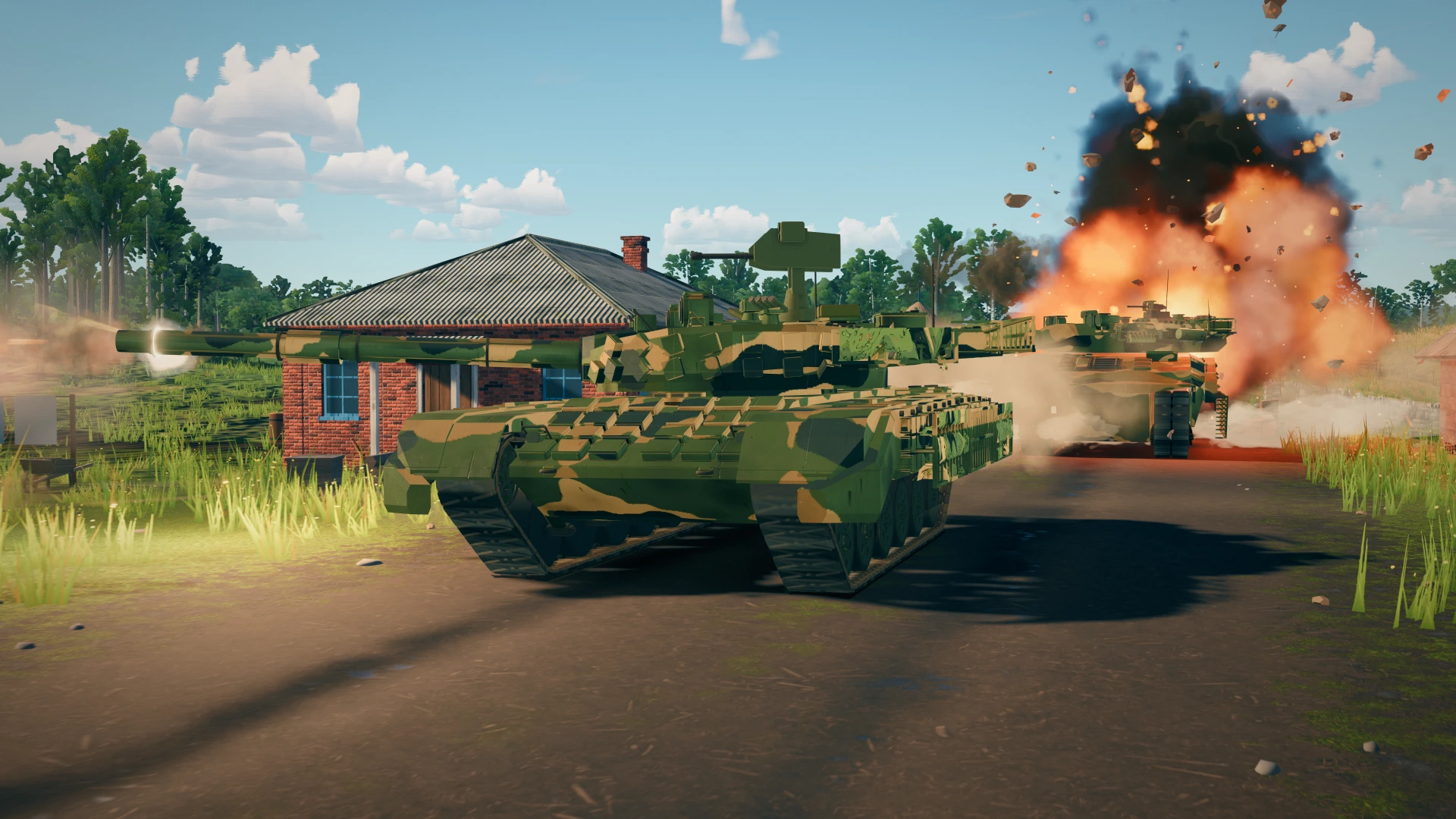
Close game-rendered tank firing in Steinburg
Close geometry // muzzle lighting, dust, material response
Driver responsibilityCurrent mechanismFailure behavior
Image clarityDevice-capped pixel ratio, adaptive internal scale, subpixel AA, fused output/grade.Optional resolution and post cost adapt before gameplay.
ShadowsStable cascades, texel anchoring, bounded contrast, articulated tank shadow proxies.Quality tiers reduce cascade cost without altering visibility rules.
Shader readinessBoot and transition warmup of battle-critical material/pass variants.Countdown waits for required visual work instead of compiling on first fire.
GPU safetyCapability probes, framebuffer validation, context-loss recovery, black-frame rescue ladder.Optional shadows, environment, fog, and post can be stepped down.

Primary implementation files: src/engine/renderer.ts, post.ts, lighting.ts, deviceDiag.ts, renderScalePolicy.ts, and the shadow stability and refresh self-tests.

03 // Tank design

Shared vehicle specifications

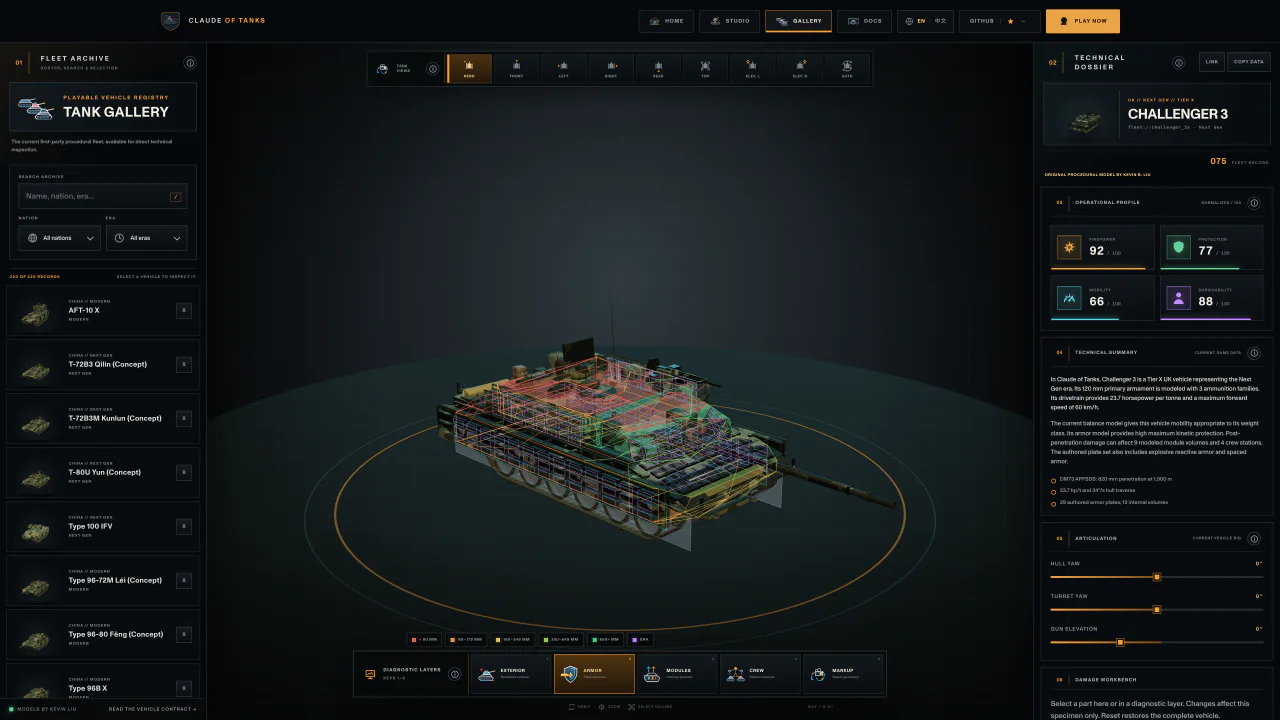
The canonical roster reports 164 production-visible vehicles, 201 keyed local-development models, and 203 saved records, with 2 reference-only placeholders kept outside the playable path. Every playable remains first-party procedural with zero GLB-sourced playable geometry. A shared vehicle specification supplies data to garage cards, combat authority, bots, icons, anatomy diagrams, Tank Gallery, and Scene Studio.

specificationcanonical data

Dimensions, mass, engine, movement, weapon, armor, modules, crew, labels, markings, nation, class, and tier.

procedural rigcurrent geometry

Hull, turret, gun, recoil group, fittings, suspension, road wheels, flexible track path, shadow proxies, and LOD.

combat anatomysimulation data

Authored plates, internal volumes, crew stations, muzzle and articulation anchors, hit logic, and damage state.

release checksverification

Current hero, side, and top assets; geometry fingerprints; anatomy diagrams; focused profile tests; and release results.

Close view of a current first-party tank rig
First-party rig // armor, fittings, markings, running gear
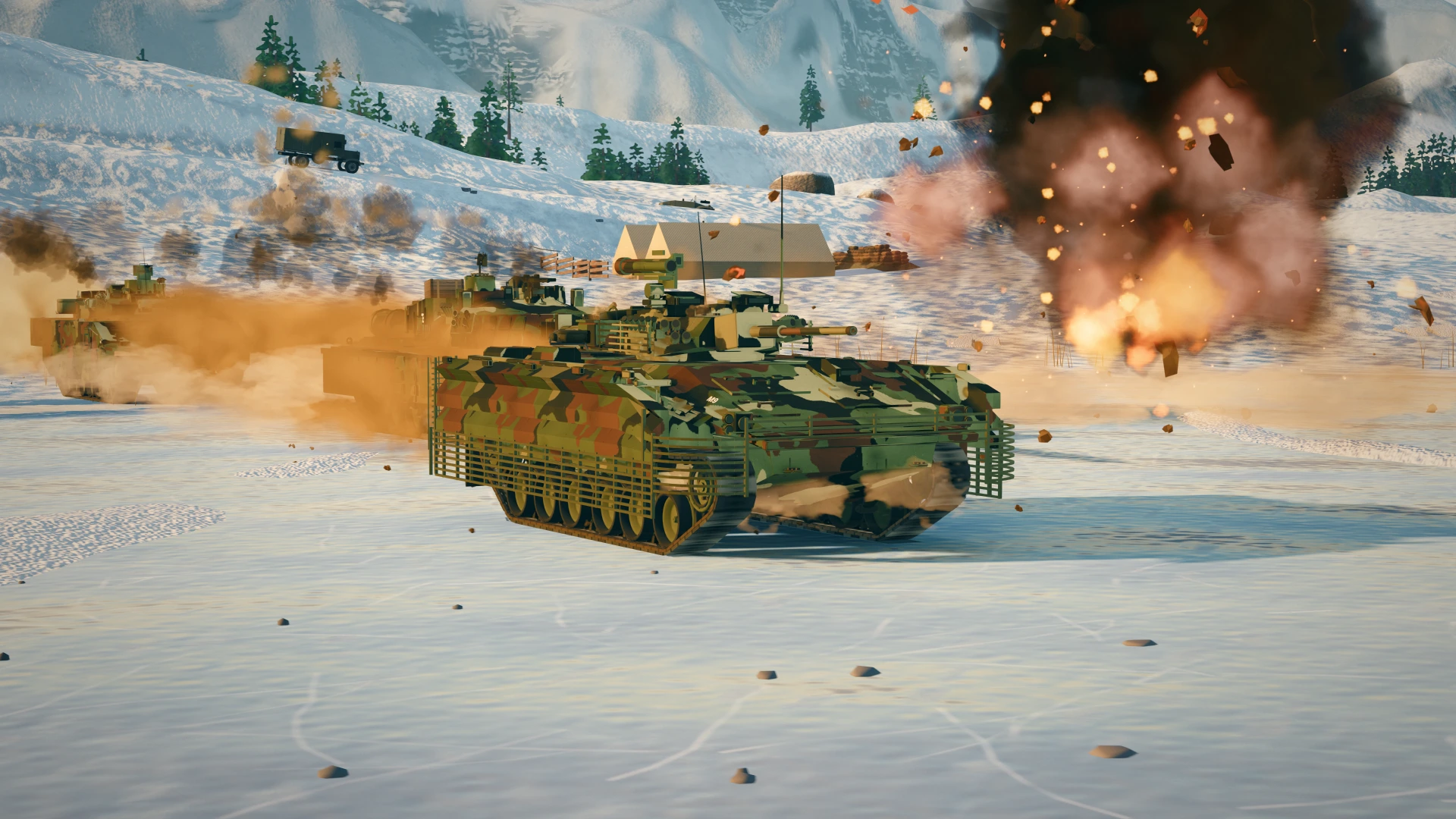
Bradley fighting in Frontier Basin
Vehicle diversity // IFV mechanics in a current battlefield

Vehicle systems include class-specific IFV statistics and audio behavior, visible recoil, magazine autoloaders, missiles and special actions, Swedish siege suspension, vehicle-specific fidelity profiles, and component-level geometry reports.

04 // Combat + killcam

Projectile and damage resolution

Current X-ray killcam showing a resolved shell path through armor and modules
X-ray killcam // authoritative armor and module resolution
Multiple tanks firing and producing impact sparks
Effects // muzzle flash, tracer, impact, dust, armor sparks
  1. The center reticle requests a finite world-space point.
  2. Authority bounds turret yaw, gun pitch, traverse rate, and dispersion.
  3. The articulated muzzle transform spawns AP, APCR, APFSDS, HEAT, or HE.
  4. Projectile travel and gravity determine the first eligible world or vehicle contact.
  5. Armor evaluates the struck plate, impact angle, slope, normalization, ricochet, overmatch, spaced layers, ERA, and ammunition behavior.
  6. Damage updates hit points, modules, crew, fire, repair, tracks, and destruction state.
  7. The HUD and X-ray killcam present the completed result.
Killcam invariantThe X-ray view is a presentation of authority data. It cannot generate a second penetration or damage outcome.

05 // Worlds + physics

Battlefield construction and physics

Verdant Fields, Sirocco Wadi, Frosthollow, Steinburg, Saltmere Bay, Amberford, Tarkhan Steppe, Cinder Junction, Frontier Basin, Nordhavn Fjord, Jade River Delta, Redrock Divide, Monsoon Ridge, Glacier Pass, Obsidian Caldera, Ironworks, Ruinspires, Blackglass District, Titan Gorge, and Skybridge Chasm share the current world systems.

Each map combines designed routes and role-specific positions with smoothed terrain, matte surface materials, atmosphere, textured structures, precise collision, modern wreck families, detached remnants, movable props, crushable objects, toppling, linked utility wires, vegetation, craters, and persistent networked destruction. The original eight maps use the same current world systems as the expansion maps.

06 // HUD + UI

Interface design across game states

M1A3 Abrams centered on the illuminated service platform inside Verdant Motor Pool
Verdant Motor Pool // illuminated workshop floor // production Garage
M1 Abrams undergoing maintenance beside wheel dollies, tool storage, ammunition racks, and flammable-material drums
Abrams service bay // running-gear work // grounded shop equipment
T-90A Burlak hull and turret staged beneath overhead cranes in a maintenance bay
Burlak service bay // separated assembly // overhead lift coverage
All ten Garage environments shown with a varied non-Abrams fleet and the current Garage interface
Ten Garage environments // varied vehicle fleet // 4 September 2026 in-engine contact sheet

The Garage combines one consistent vehicle and camera presentation with ten distinct service locations. Verdant keeps its enclosed Motor Pool; the other nine destinations use compact battlefield-derived terrain, connected structures, full-detail service exhibits, biome horizons, and the shared procedural sky without loading a battle world. Their release gate checks four orbit views, responsive layouts, structure support and collision, platform clearance, transition timing, and repeated-cycle resource growth.

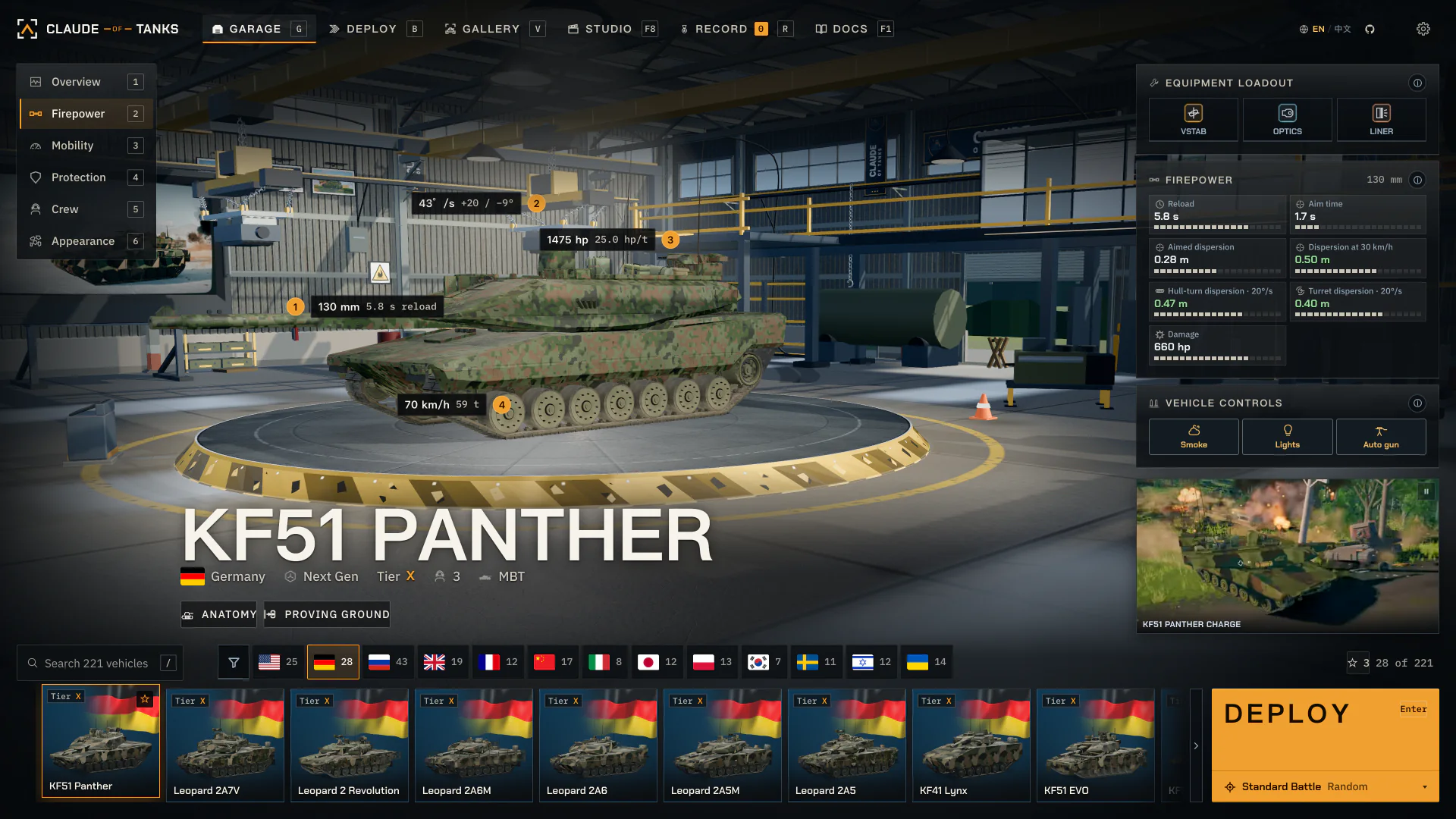
Current Garage interface with a K2
Garage // maps, camos, dossier, rooms
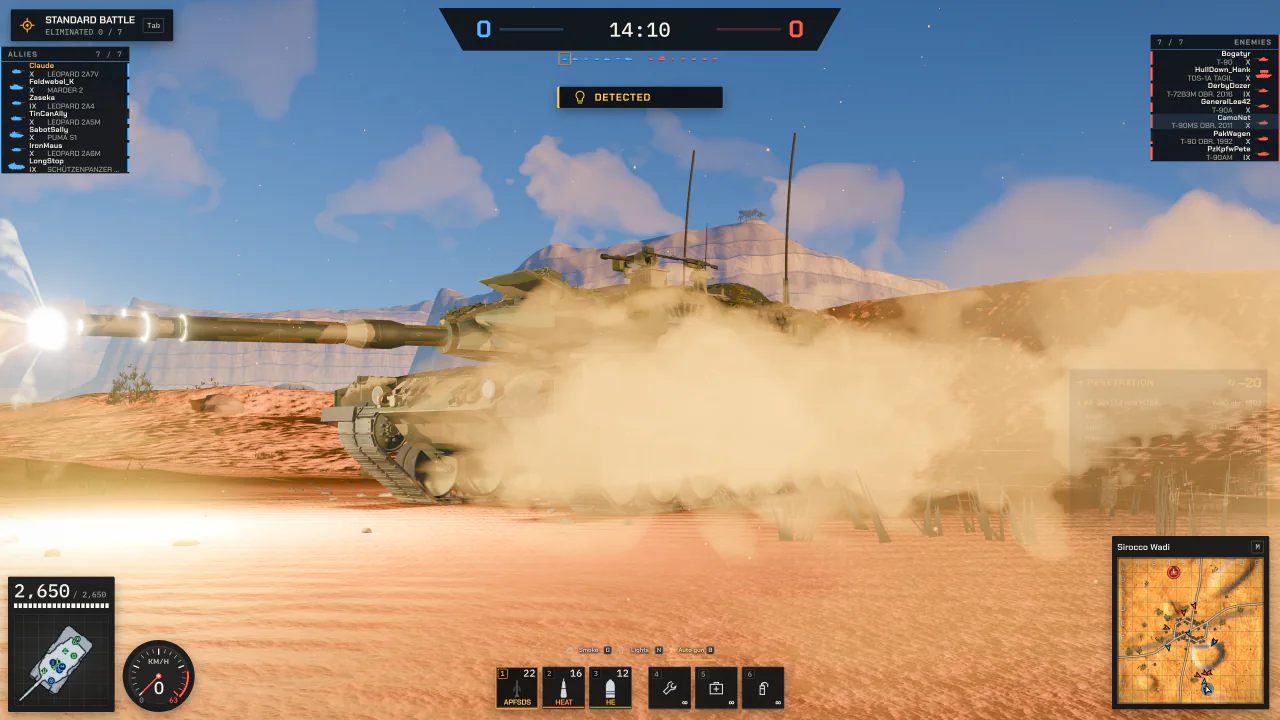
Current K2 battle HUD
Battle // reticles, ammo, team state, minimap
Current Leclerc XLR precision sight
Sight // range, aim, bore, dispersion
Current X-ray killcam resolving a hit
Killcam // armor, path, modules, result

The current interface includes the vehicle dossier and component workshop, map and camouflage previews, autoloader shell rack, stabilized aiming readouts, room chat, local lifetime statistics, responsive nation filters, debrief and rematch flow, settings, graphics and audio controls, and compact FPS and ping telemetry. Debug and shadow-tuning controls require dedicated URL parameters and remain hidden during normal play.

07 // Multiplayer

Multiplayer authority and session persistence

Opposing live multiplayer views: an M1A2 Abrams and T-90M Proryv use matching camouflage and aim at each other from mirrored player cameras
Two rendered clients // opposing cameras // authority-owned aiming and filtered snapshots

Client responsibilities

Input requests and presentation.

  • Normalized movement and aim input
  • Fire, ammunition, and equipment input
  • Local movement prediction
  • Snapshot interpolation
  • HUD, audio, effects, and reports
Trust boundary

Authority responsibilities

Simulation outcomes and shared state.

  • Movement acceptance
  • Reload and projectile spawning
  • Hits, armor, and damage
  • Spotting and hidden state
  • Destruction and match results

Private and LAN rooms use browser-hosted WebRTC authority. Ranked matches use a renderer-free Node service. Rooms retain the host-selected map, player camouflage, authenticated chat, invitation metadata, rejoin state, garage presence, team and ready state, and round-to-round continuity. Separate browser tests verify four-player and 7v7 moving-and-firing matches, including synchronization, reconciliation, rubber-banding, event delivery, and rendering behavior.

08 // Performance + GPU

Performance budgets and runtime ownership

The garage does not build a battlefield until it is required. Battle entry completes required warmup before the countdown, performance-sensitive loops reuse scratch state, and repeated world and vehicle resources are cached or pooled. Effect budgets limit transient work. Public presentation pages do not start the playable renderer.

BudgetMechanismInvariant
SimulationBounded fixed-step accumulator at 60 Hz.Graphics quality cannot change combat.
RenderingHigh-refresh frame scheduler, adaptive scale, quality tiers, fused post output.Certified test runs reached the native 120 FPS refresh rate on measured hardware.
Draw/GPUInstancing/merging, LOD cadence, shadow proxies, cached worlds, resource disposal.Cosmetic work is reduced before simulation work.
LoadingGarage-first boot, lazy battle graph, shader/material warmup, staged world activation.Required battle work finishes before countdown.
Network20 Hz viewer-filtered snapshots, deltas, keyframes, event channel, bounded prediction.Hidden transforms never reach unauthorized viewers.
verification // focused paths
npm run perf:dev
npm run perf:loading
npm run test:net:render
node src/engine/renderScalePolicy.selftest.mjs
node src/engine/shadowStability.selftest.mjs

09 // Mobile compatibility

Mobile rendering and input

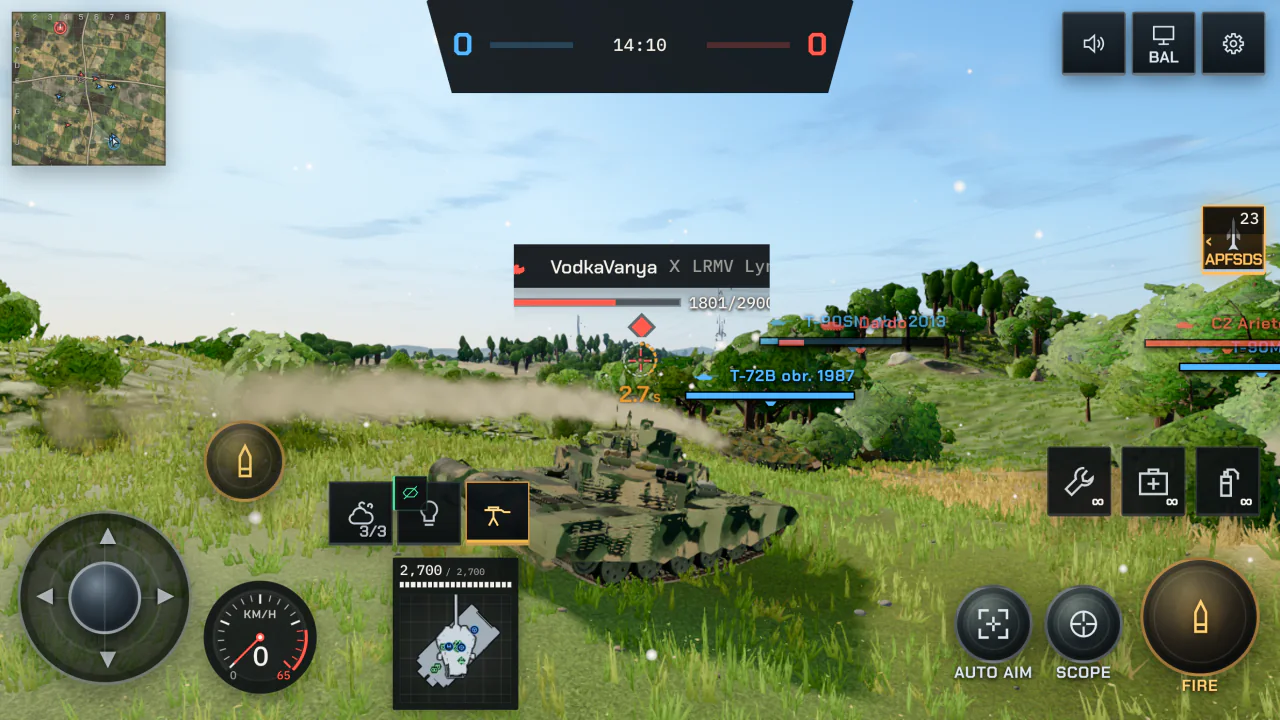
Current Claude of Tanks mobile Garage interface with a K2
Touch interface // safe-area layout and direct controls
Mobile-compatible battlefield composition rendered by the game
Adaptive rendering // unchanged simulation

Phones and tablets receive dual-stick movement, swipe aim, pinch-to-scope, held/dynamic fire, accessible ammunition and equipment placement, safe-area-aware layout, compact settings, and automatic device tiers. Boot-time GPU probes, pixel-ratio caps, memory-conscious detail, shadow rescue, PMREM validation, and a black-scene watchdog let presentation recover without changing gameplay.

10 // Scene Studio

Scene production with the game renderer

Current Scene Studio unified workspace
Scene Studio // map, actors, pose, effects, storyboard, camera, video, still, JSON

Open /studio or press F8 in the garage. Studio places any roster vehicle on any map, conforms actors to terrain, applies camouflage and damage states, schedules the game’s firing and destruction effects, scrubs a deterministic 20-second timeline, builds camera, actor, and effect tracks, records video, captures high-resolution PNGs, and imports or exports scene JSON. The Field Frames drawer provides the current 88-frame archive beside the authoring controls.

Scene Studio collection // 20 reels

Modern tank duels

Twenty recorded scenes pair modern tanks across the full battlefield set. Select a scene to load it into the player.

M1A2 Abrams SEPv3 vs T-90MVerdant Fields // 14.7 seconds // 720p01 / 20

Contact-sheet review

Each campaign begins with deterministic scene data. Low-resolution captures are then reviewed in groups of ten. The contact sheets reveal weak silhouettes, obstructed cameras, unreadable vehicles, repetitive staging, and effects that hide the action. Approved frames proceed to 4K export, automated image analysis, owner approval, and publication.

Scene JSONReview captureContact sheets4K + gradeOwner approval
Action campaign30 frames // 3 review sheets
Action campaign review sheet 1, frames 61 through 70 Action campaign review sheet 2, frames 71 through 80 Action campaign review sheet 3, frames 81 through 90
Foreground campaign30 frames // 3 review sheets
Foreground campaign review sheet 1, frames 91 through 100 Foreground campaign review sheet 2, frames 101 through 110 Foreground campaign review sheet 3, frames 111 through 120

Open any sheet at full resolution. The filenames are the stable scene IDs used by the capture and quality receipts.

12 // Verification

Automated verification

npm testbehavior

Simulation, networking, UI, rendering policy, vehicles, maps, collision, destruction, assets, and tools.

tank:native:checkprovenance

Reports 174 first-party procedural playables and rejects all runtime GLB and comparison-source paths.

tank:release:checkvehicle checks

Targeted anatomy, geometry, generated assets, profiles, and current release results.

marketing-shotsimage review

Deterministic scenes, six review sheets, 4K image analysis, and owner approval produce the 88-frame archive.

Local verification commands
npm install
npx vite
npm test
npm run tank:native:check
npm run test:net:seven:live
npm run build

Continue with architecture, performance, multiplayer, Studio, Gallery, and the maintained architecture decisions.

Visual archive // 88 field frames

Vehicles in game scenes

Review the same first-party vehicle rigs in battle, destruction, terrain, and Scene Studio compositions.